The Water Belt · Los Angeles · Établi MMXXIV

Dress for
the water.

You own a belt for the office, a belt for the wedding, a belt for the funeral. You enter the water wearing nothing that was made for it. The Water Belt is the first article of formal dress engineered to be worn beneath the surface — and the first to be finished, deliberately, in a way that only reads correctly when wet.

Lots in the house
Six
Rated to
10,935 m
Load bearing
None
Acquisition
By invitation

The principle

It holds
nothing.

A belt worn in water supports no garment and bears no load. Buoyancy has already done the work. Every gram of a Water Belt is therefore ceremony, and we consider this its highest achievement. A wedding ring holds nothing either.

The finish

Worn wet
only.

Each lot is cut, dyed and burnished to be at its best submerged. The leather is tanned to darken under water, not to survive it. Dry, the line falls wrong and the buckle reads dull. This is not a flaw. It is the specification.

The house

Eleven
hands.

Eleven artisans work in a single room in Los Angeles, four metres from the water they design against. One buckle takes 340 hours. No machine is permitted to touch the meniscus edge — the top seam, which must break the surface cleanly.


Lot 02 · The house standard

Chlorine Noir

Black tie for the residential pool. Calfskin blackened in a chlorine bath over nine days, buckle milled from a single billet and finished to catch light through moving water. Worn at three metres it is, by some distance, the most formal object in the pool.


“The drawstring is an apology. We are not sorry.”
Jackson Pastel — On Dressing for Water, Proposition II

Campaign image pending

Drop the campaign photograph into the folder below and reload.

photos/model-01.jpg

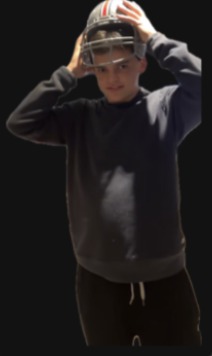
Photographed at 23:40 · unbelted

The campaign

The house
model

Photographed at 23:40, at the edge of the water, unbelted. The house publishes the image uncorrected and unlit.

It is the clearest statement of the problem this house exists to solve: a man at the edge of the water, dressed for nothing, moments from entering the only room he owns no clothing for. He is not underdressed. He was never offered the alternative.

He was fitted the following morning. That photograph also exists. We have not published it, on the grounds that it is considerably less instructive.

The house does not name its models

The founding document

On Dressing
for Water

The essay on which the house was founded, written in a single sitting and unrevised since. It is issued with every acquisition, letterpressed on paper that is not waterproof.

Jackson Pastel First edition Los Angeles Six propositions Unrevised
I

The undressed hour

We dress for every room we enter. We have invented a garment for the boardroom, the ballroom, the mountain, the desert, the operating theatre and the surface of the moon. We have tailored for altitude, for heat, for mourning, for war. And then we arrive at the one element that surrounds the body completely, that touches every centimetre of skin at once, and we take everything off.

The water is the last undressed hour of civilised life. Not out of principle — out of oversight. Nobody decided this. It simply was never addressed, and so it became custom, and custom became the assumption that water is a place one goes to stop being dressed.

I reject the assumption entirely.

II

The drawstring is an apology

Consider the only fastening humanity has been willing to bring into water: a length of cord, threaded through a hem, tied in a bow, and then hidden inside the waistband so that no one has to look at it.

We hide it because we are embarrassed by it. It is a knot — the fastening of a parcel, of a shoe, of a child. The man who would not leave his house in a knotted belt will happily swim in one, because he has decided that the water is not a room and therefore has no standards.

The water is a room. It has standards. We are simply the first house to write them down.

III

Function is a lower floor

It will be objected that a belt in water holds nothing up. This is correct. Buoyancy relieves the garment of its weight; the belt is freed of its labour. Our critics present this as an argument against the object. It is the entire argument for it.

Every object we call precious has been released from function. The wedding band fastens nothing. The cufflink survives long after the shirt learned to button itself. The dress watch tells a time already displayed on four nearer surfaces. Usefulness is the lower floor of an object's life — the floor it stands on before it becomes meaningful.

A belt in the water is the first belt in history to be pure. Nothing hangs from it. Nothing depends on it. It is worn for one reason: that the wearer decided the occasion deserved it.

Nothing hangs from it. That is the point.
IV

The Pastel Line

A submerged body does not wear its waist where a standing body does. Buoyancy lifts the torso, the ribs open, the hips drop away, and the visual centre of the figure rises by between four and nine centimetres depending on lung volume and salinity.

The house measures this as a plane: the horizontal at which the body's mass is halved in water. We call it the Pastel Line. Every lot is cut to it, which is why a Water Belt sits fractionally high on land and looks, to the untrained eye, slightly wrong. It is not wrong. You are simply not yet in the water.

V

Against resistance

The industry offers us the phrase water-resistant, and expects gratitude. Resistance is hostility. It describes an object braced against its surroundings, enduring them, waiting to be returned to dry air where it belongs.

No Water Belt resists water. Each is finished so that water completes it: the tannage deepens, the grain opens, the meniscus edge catches the surface and holds a line of light along the waist that cannot be photographed and can only be seen by someone standing at the side of the pool.

The belt is not waterproof. The belt is water-dressed.

VI

One may not wear it dry

It follows that wearing a Water Belt on land is not a misuse but a category error, in the way that a candle carried unlit through a bright room is not being used incorrectly so much as not being used at all.

The house asks a single undertaking of every client, recorded at acquisition and enforced by nothing but character: that the belt is fastened only at the water's edge, and unfastened only when the wearer has returned to it. Land wear voids the guarantee. It has voided four.

Jackson Pastel
Founder & Directeur de l'Eau
Los Angeles · Written poolside · Unrevised

Six lots · Spring / Submerged

The Collection

The house does not order its collection by price. It orders by depth — the maximum working depth at which each lot has been certified to hang correctly on the Pastel Line. The deeper the water a belt is made for, the further it is from anything that could reasonably be called necessary. Plates are shown at one third scale. They are not smaller in person.

Ascending depth · Ascending consequence

Portrait pending

Drop the founder's photographs into the folder below and reload. Any files named jackson-01 … jackson-06 will enter the rotation.

water-belt/photos/jackson-01.jpg
Los Angeles

About the creator

Jackson
Pastel

Founder & Directeur de l'Eau

At eighteen, Jackson Pastel has built the only luxury house in the world with no dry product, no retail footprint, no investors he can name, and a waiting list measured in years. He did not go to design school. He has never held a job. He describes the founding of The Water Belt as “an afternoon that got out of hand,” which is the closest thing to modesty anyone has recorded from him.

The observation came, as he tells it, at a residential pool in Los Angeles in the spring of 2026. Pastel was in black tie, four metres from the water, and noticed that every person in the pool was, formally speaking, undressed — and that not one of them had chosen it. “They hadn't decided to be casual,” he said later. “Nobody had ever offered them the alternative.” He sketched the first buckle that evening on the back of a valet ticket. He still has it. It is the only document the house has ever framed.

What followed is the part of the story his investors like to tell. Eleven artisans were recruited in six weeks, several from houses that had employed them for decades and none of whom will discuss the terms. The first lot sold before it was finished, to a buyer who has never been named and who reportedly owns three. By the end of the first year the house had produced fewer than ninety belts and turned down an eight-figure offer for the buckle patent, on the grounds — Pastel's words — that “a patent is a thing you file when you're worried someone else could have thought of it.”

He keeps no office. Correspondence with the house goes through a single atelier line answered between eleven and one. He does not use email; the house maintains an address, and the address forwards to a printer. Colleagues describe a working style that is either monastic or theatrical depending on who is asked, and Pastel has never bothered to argue for the first reading. Asked in his only sit-down interview whether he considered himself a designer, he said: “I consider myself the person who noticed.”

The ambition has not stayed in the pool. Pastel Hydrodynamics now employs oceanographers, a former dive-systems engineer from a submersible programme, and a two-person team working on tidal timing — an effort he has described, without apparent irony, as “the calendar problem.” He has said publicly that he intends the house to outlive him by four centuries, and that the ten-thousand-metre lot exists for exactly one reason: so that no one who comes after him can claim there was somewhere the house had not dressed.

Age
18
House valuation
$4.2BSelf-assessed
Artisans
11
Emails sent
0Since founding
  • Hydro Quarterly“Thirty Under Thirty: the eighteen-year-old who found a room nobody had furnished.”
  • Meridian Review“The most defensible unnecessary object of the decade.”
  • Aperture & Basin“Pastel is not selling belts. He is selling the idea that the pool has a dress code.”
  • The Continental Swimmer“Four centuries is an absurd thing to plan for. He has the paperwork.”
The record

Four years,
ninety belts

  1. 2026

    The observation

    A residential pool, Los Angeles. Pastel, in black tie, sketches the first buckle on a valet ticket. The house dates its founding to that evening rather than to its incorporation nine months later, a distinction he insists on in every document.

  2. 2027

    Eleven hands

    The atelier is assembled in six weeks from four countries. The room is chosen for one reason: it is four metres from water. Lot 01, LE MÉNISQUE, is completed after 340 hours on the buckle alone and sells before it is photographed.

  3. 2028

    The patent refusal

    An eight-figure offer for the meniscus-edge buckle is declined in a two-line letter, printed and posted. The letter is now reproduced, without permission, in three design curricula.

  4. 2029

    The trench

    LA GOUTTE is certified at 10,935 metres and immediately withdrawn from sale. One exists. It has never been worn, which the house considers not a failure of the object but the completion of it.


“I consider myself the person who noticed.”
Jackson Pastel — his only sit-down interview, 2028

Acquisition

The Atelier

The Water Belt keeps no boutique and no stockist. Lots are released to the register in the order it was joined, and a fitting is conducted in water — the client's own, or the atelier basin, which is kept at 27°C and is the only room in the house with a dress code.

Step 0114–26 months The register Entry is by introduction from an existing client. The house does not maintain a public list and will not confirm whether one has been joined. By invitation
Step 0290 minutes The fitting Conducted submerged, to the Pastel Line. Approximately ninety minutes. Black tie is customary and is not, the house stresses, required. Atelier basin
Step 03One line The undertaking Every client signs a single line: that the belt will be fastened at the water's edge and unfastened on return to it. Land wear voids the guarantee. Signed in ink

Inside the atelier

The room

Four metres from water, eleven hands, and no photography permitted beyond these two frames.

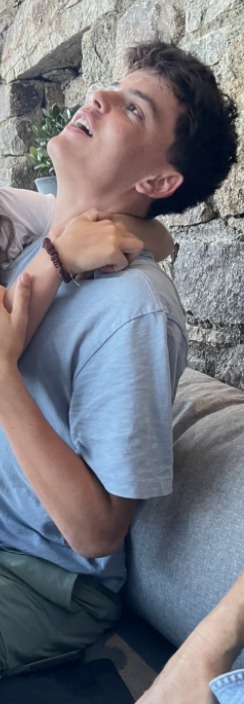
A client held at the shoulders during a fitting
The fitting · ninety minutes A client is brought to the Pastel Line and held there while the taper is marked. The house does not describe the process as comfortable and has stopped claiming otherwise in its literature.
An artisan wearing head protection before a pressure test
Pressure testing · before the cycle Head protection is atelier policy and has been since the second forty-metre cycle. The house considers the matter closed and declines to elaborate on the first.